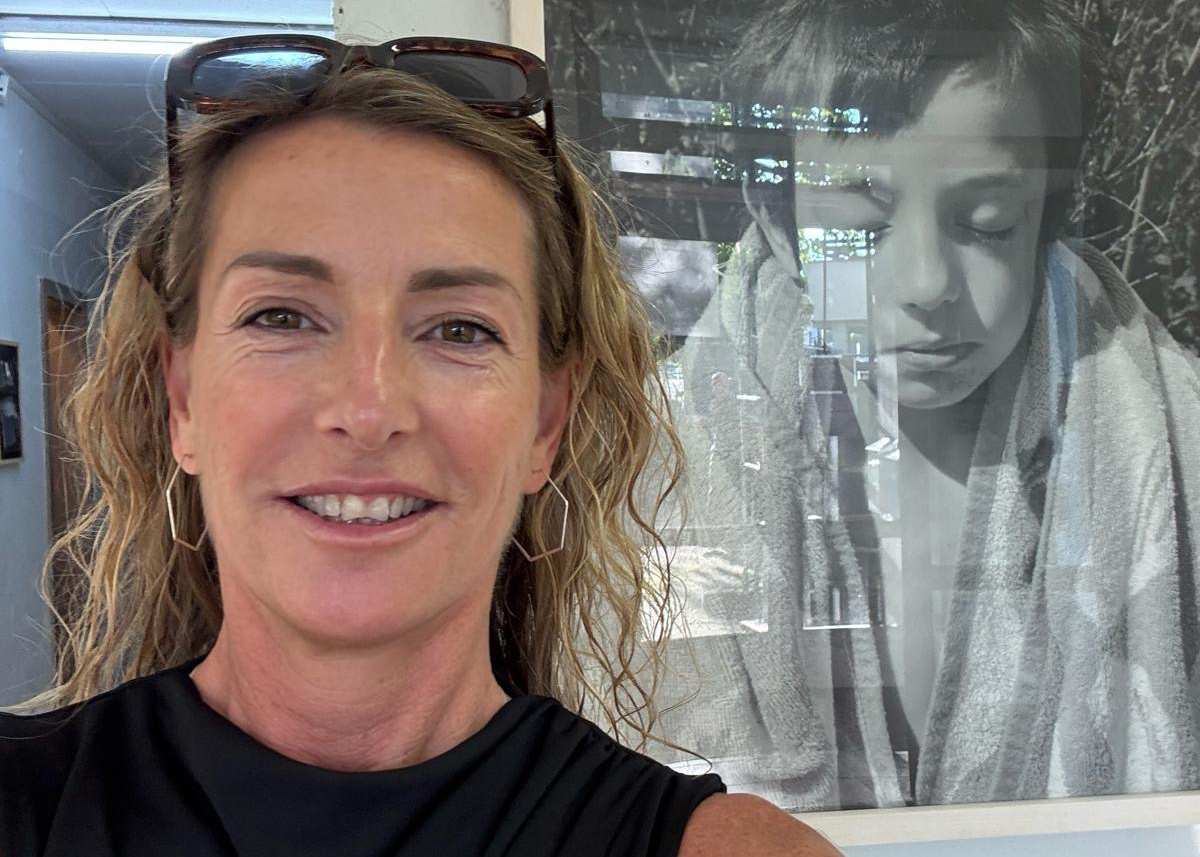
Interview with Jo Bradford
Interview with
Jo Bradford, UK
title photo for our 2026 competition
Jo Bradford is a UK-based photographer whose work explores how we perceive and experience the intangible in an increasingly technology-driven world. Working from her sustainable, off-grid home on Dartmoor, she combines traditional documentary approaches with experimental darkroom practices, often incorporating textiles, printmaking, and historical techniques into her process. Her work is deeply rooted in both environmental awareness and a fascination with light, colour, and materiality.
With over two decades of research in analogue colour darkroom processes, Bradford creates visually striking abstract works that capture the intensity and luminosity of light. Alongside her artistic practice, she is an educator, author, and internationally exhibited artist.
Jo Bradford’s work If Not Now, When?, was on display at Fotoforum Dresden as a satellite exhibition of the PORTRAITS – Hellerau Photography Award 2025: https://fotoforumdresden.de/archiv-2025-jo-bradford/
Jo, can you recall what first drew you to photography, and how that initial attraction took shape?
My father and uncle were both keen amateur photographers, so there were always cameras around the house. In my early teens my mum worked in a small portrait studio, so the darkroom was part of the atmosphere of my childhood. I think I always knew the magic of an exposed image appearing on paper under red light. I do not remember seeing it for the first time. It feels as though it was simply always there.
I had a small Kodak compact 35mm camera from quite an early age and made photographs of the nature and people around me. The impulse to make a record of what I saw and of the life around me was always there. I found I was drawn to photography because it allowed me to pay attention in a very particular way. It gave me permission to be observant and to linger quietly in places and situations that felt interesting, and I learnt too that it gave me a way to stay close to the passing moments and feelings I held on those strips of film.
At first the attraction was simple. It was the thrill of seeing an image appear. Then, over time, I understood that a photograph is more than a direct description, as I noticed the way it held time and tenderness in quiet family moments at home. It could hold absence. That vague observation gradually became my way of thinking, as much as a way of recording. I keep returning to the same questions through different materials and forms.
Early in your career, what did photography offer you that other artistic media did not?
Photography gave me a direct relationship with the world as it already was, even when the work itself felt poetic or abstract. Painting or drawing seemed to ask for a different kind of invention; I always felt that I saw in light and shade. Photography let me begin with what was already there. I feel I am more like a sculptor, taking a raw block of everything and carving it away to make something from all that is there. I love that. I love that sense that you could collaborate with chance.
Photography also holds a tension for me. A photograph can seem factual and still be full of feeling. It can gradually reveal something more emotional or psychological. That fascinated me early on and still does. When I began making cameraless work, I did not feel I was leaving photography behind. I felt I was moving further into it. I was still working with the usual suspects; light, time, surface, and trace, but without needing the lens to do all the work.
Your portfolio is strikingly diverse. Your abstract works, particularly the photograms and luminograms, feel highly poetic and materially sensitive. Which photographers, artists, or traditions influenced this strand of your practice?
This part of my practice grew from a desire to make photographs that let light itself become the subject. I’ve was drawn to cameraless processes for the sheer joy of experimentation, and to the darkroom as a place of making and discovery, it soon became somewhere that I generate work and ideas, rather than simply producing prints it had been in my early years of making images.
The influences come from different directions. Early photographic experimentation, yes, but also modernist abstraction and artists whose thinking is shaped by material, rhythm, restraint and silence. I’ve looked closely at painters, printmakers, and textile traditions where repetition and the behaviour of materials are part of the thought. There are real affinities with geometric abstraction, minimalism, Bauhaus thinking, De Stijl, colour field painting… artists like Agnes Martin, Rothko, Anni Albers, Barnett Newman, Josef Albers, James Turrell.
In the luminograms and cameraless colour work, the images are built in my pitch black darkroom (you cannot use a red safelight in darkrooms when colour printing) through masking, interruption, refraction, and timed exposure. White light fractures into spectral colour as it lands on photographic paper, and the image becomes a direct record of that event. What matters to me is that the idea and the making are inseparable. I’m interested in what a photograph actually is, I endlessly explore how it comes into being, and what it means for light to become material.
Place matters here too. Dartmoor’s weather, and its shifting light, feed the abstract work in ways that are equally practical and emotional.
Constructing Space came from a related set of questions. It’s a series of cameraless photograms made using crushed fragments of ancient 4.5 billion year old chondrite meteorites placed directly onto light-sensitive paper. Chondrites are among the most primitive and pristine rocks in the solar system. Older than our planet, the material itself formed at the very beginning of the solar system, essentially stardust from before the planets existed. The work asks what we believe when we encounter images of space, particularly when so many of those pictures begin as data and are later translated into image form. I wanted to make a different kind of authentic space image through direct contact with stardust. Viewers often assume the works were made through a telescope, and I love that slippage. It says something about how strongly photography still carries an assumed claim to truth. A digital copy of one of the photograms later travelled into space aboard Space Shuttle Endeavour in 2011, which still feels faintly surreal to me.
After Light, Folded Time continues some of these questions in a more intimate register. The work folds memory and time into visible form, trying to give shape to what is usually fleeting or unseen. I work with treasured possessions left behind by people who have died, making images that act as joyful memorials. I’m interested in how photographic materials can hold grief gently, while also making space for love and the continued life of those objects. Because of the trust involved, and the slow nature of the process, I take on only a very limited number of new commissions from families for this work each year.
Many of these works resist easy reproduction and are tied to process and materiality. In an image culture dominated by screens and instant circulation, does that resistance still matter to you?
Yes, very much. It changes the pace of looking. When a work doesn’t translate fully to a screen, it asks something different of the viewer. It asks for presence.
That’s not nostalgia. I’m not against digital circulation at all… screens are brilliant for access and for sharing work widely. But physical photographic works carry surface, scale, weight, and presence in ways that simply can’t be fully translated. That matters to me.
Cameraless work also asks for a slower encounter because it’s made slowly. It comes into being through contact, interruption, exposure and material change. In that sense it does stand apart from the speed of image culture, and I think that still counts for something.
When starting a new project, how do you negotiate the balance between concept and material process? Does one typically lead the other?
I don’t really separate them. Usually the making is the thinking. The materials aren’t there to serve an idea that arrived fully formed in advance. Very often the idea emerges through the process itself – that’s especially true in the darkroom, where experimentation feels like asking questions rather than following instructions. I’m interested in stretching photography a little, testing what it can do, paying attention to what happens when light, chemistry, time and material all meet in unpredictable ways. Concept and process are in conversation from the start. One pushes against the other
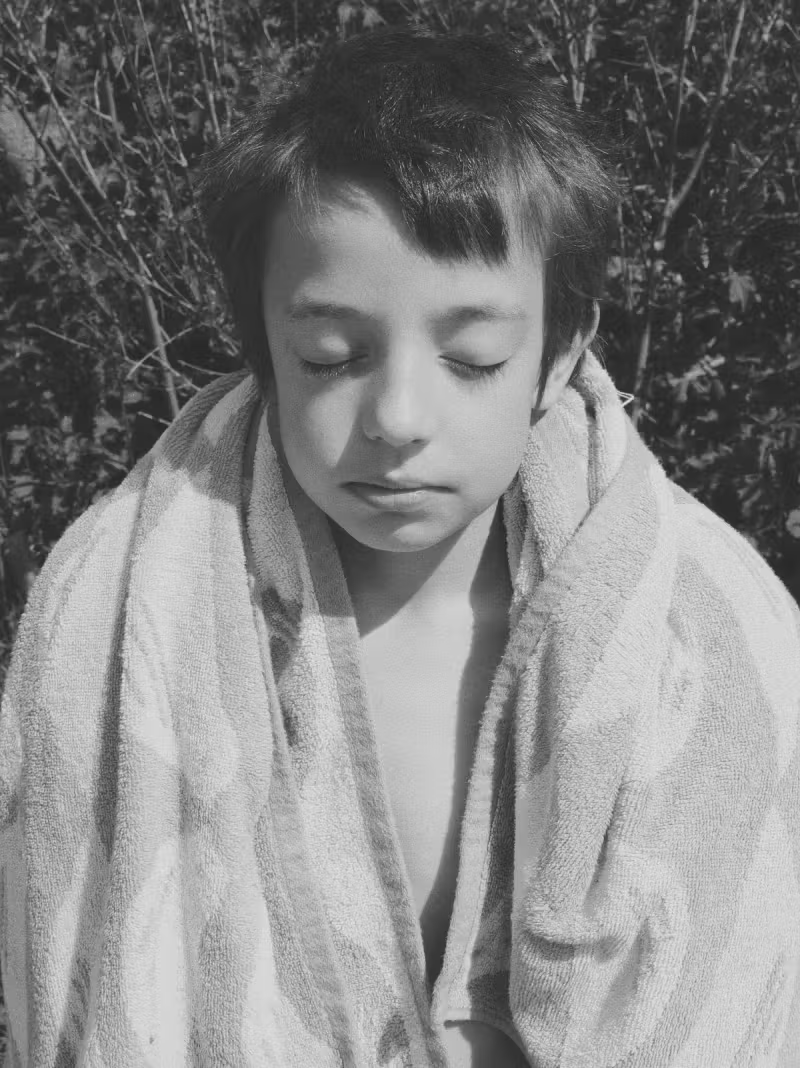
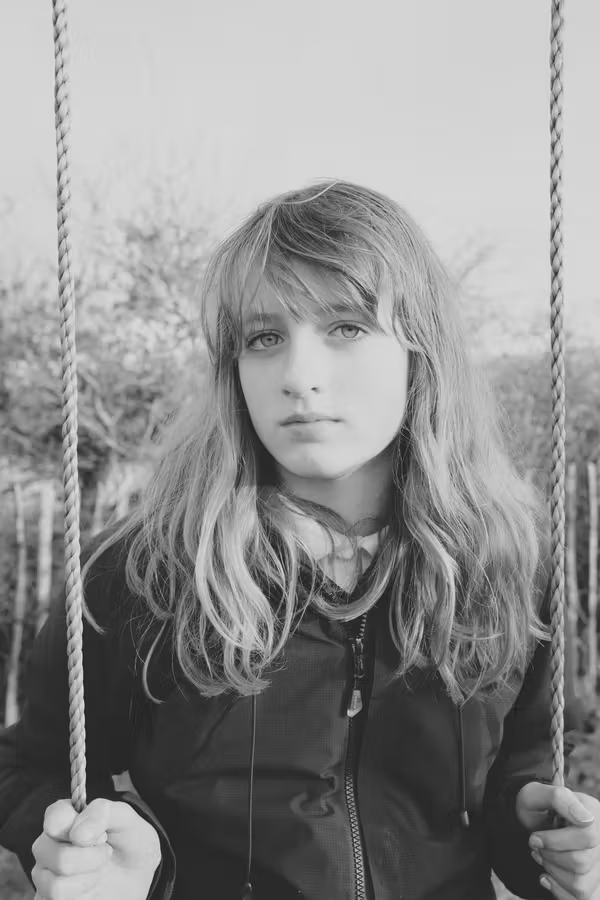
With If Not Now, When?, you began a black and white autobiographical series focused on home, children, and familial or relational metaphors. The Fotoforum Dresden presented this work in a solo exhibition last year, and your new title image for the 2026 competition stems from this series. What prompted this turn towards autobiography at this point in your career? And can you tell us a little more about that image of your daughter?
The turn towards autobiography came from necessity and a kind of inevitability. The subjects that mattered most were already there in front of me – motherhood, time, life unfolding around my home, the shifting nature of closeness within family life. I think there comes a point when you stop looking elsewhere for what matters and begin to trust what is already pressing on you.
The project has unfolded over many years, and in that time my children’s agency within the work has grown too. They were never simply subjects to me, and as they’ve grown up they’ve become much more active participants in how the work is understood and shared. When we were preparing the Dresden exhibition, we went back to the archive together and talked about what the images meant to us now, beyond when I first made them. That felt important. The edit became something shared and was more potent to me as a kind of joint truth-telling.
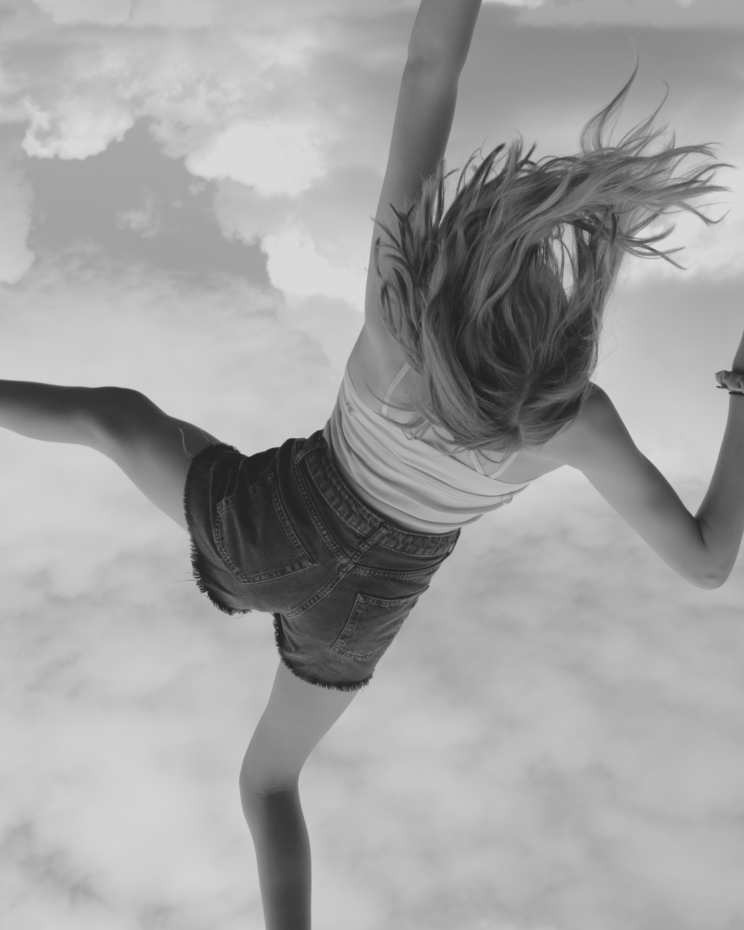
The 2026 title image you mentioned shows my daughter suspended against cloud, photographed from above so the ground disappears. Formally it’s very spare. She moves diagonally across the frame, her hair lifted, limbs extended, almost held between falling and flying. For me the image sits somewhere between exhilaration and vulnerability. It speaks about growth and transition, and also that shifting space (when parenting teens) between holding on and letting go.
Has working so closely with your own family altered your understanding of intimacy and exposure in photography? Where do you personally draw the line between closeness and over-disclosure?
Yes, absolutely. Working with family has made me more aware of trust and of vulnerability. There is a weight of responsibility that comes with the closeness. The images emerge from our lived experience and that changes everything.
There is always a line, and it’s never fixed once and for all. I don’t make work in order to expose private emotional realities. I’m not interested in spectacle, and I’m not interested in using vulnerability as currency. The ethics are ongoing and relational. I don’t share images of my children without their knowledge and consent. Some pictures have never been shown publicly and never will be. As their boundaries shift, I follow their lead, and that has shaped not only what I show, but how I photograph.
For us, intimacy in sharing and discussing the photography is about making space for truth, care, joy and melancholy, and the right to withhold. Sometimes that means learning when not to photograph at all.
Did If Not Now, When? change your photographic practice more broadly — formally, ethically, or emotionally?
Yes, in all of those ways, though perhaps more quietly than people might expect. It made me more comfortable with ambiguity. It encouraged a quieter descriptive language. It deepened my understanding of sequencing beyond straightforward narrative. Especially with how meaning can build through rhythm, pause, return, and silence.
Living off-grid has shaped that too. It slows my process and makes it more embodied. I work with weather and with the cycle of the seasons, with the practical realities of family life in a self-sustaining homestead, and all of that has changed my attention. Photography here is folded into the everyday. It’s not separate from life.
The project also sharpened my sense of responsibility, perhaps working with people you love always does. But it reminded me that photographs can carry tenderness and honesty together. I’ve seen again and again, in my own work and in work with young people I encounter professionally, that by paying close attention, photography can offer a way to rebuild meaning when life feels fragmented.
One of your books, Smart Phone Smart Photography (2018), suggests a notably unpretentious attitude towards photographic technique. In an artist talk last year, you spoke openly about this position. If Not Now, When? was shot using both large format cameras and an iPhone, correct?
Yes, that’s right. Each tool asks something different of me. Large format slows everything down and asks for deliberation. A smartphone lets me respond within the flow of everyday life… it’s often the camera that’s actually there when life is happening.
I’ve never been especially interested in hierarchy when it comes to cameras. What matters to me is the integrity of the seeing. The tool shapes the pace and feel of the work, of course it does, but it doesn’t guarantee depth.
To put it provocatively: what, if anything, is gained by shooting a portrait with a pristine €6,000 Leica M6 rather than a battered, Dresden-built Praktica MTL bought for a fiver on eBay?
Not very much, creatively speaking, if what you’re really buying is prestige. The meaning of the picture matters more than the status of the camera.
Every camera has its own limits, and those limits can be useful. They change the pace of looking, affect texture and framing, alter the kind of attention you bring, shape the whole feel of the encounter. That relationship interests me far more than perfection. Analogue processes can bring unpredictability and a different sense of time into the work, but none of that belongs only to expensive equipment. A camera can be a beautiful object. It won’t save a thin idea.
You are currently course leader for the BA Marine and Natural History Photography at your alma mater, Falmouth University. Roughly how many student portfolios do you encounter each year?
A great many… hundreds of them, through teaching, tutorials, assessment, and feedback. Enough to notice patterns in the work, concerns that keep returning, and the ways those concerns slowly shift over time.
Across those portfolios, what recurring trends or shifts in artistic focus do you observe among emerging photographers today?
Work is becoming increasingly personal and introspective. There’s a stronger sense of localisation – surely influenced by economic realities and climate awareness – and a renewed interest in slower, process-based, and even self-published bodies of work.
I think that reflects the conditions young people are living through. Many emerging photographers are making work from what is close at hand, emotionally and practically interrogating and investigating their own lives, relationships, homes, places they know well. That doesn’t make the work feel small. Often it gives it honesty and real depth. In a time of uncertainty, I find the work carries great vulnerability and hope. There’s a desire to hold onto what feels real and make something meaningful from it. The return to slower, self-directed ways of making feels significant as authorship becomes a wish for care over speed, which offers the work real substance and staying power.
Has long-term teaching influenced your own practice — and if so, how?
Yes, definitely. Teaching keeps me awake. It keeps the practice alive because it makes me articulate things I might otherwise do instinctively. It makes me ask more of my own work. It makes me question my practice constantly.
It also keeps me open. Students bring unexpected references and fresh energy. Sometimes they find a completely different way into a problem. I don’t really experience teaching and practice as separate worlds. They rub up against each other constantly, and that’s a good thing.
Do you see your work as engaging with any specifically British photographic traditions?
Yes, though not in a fixed or especially tidy way. My work sits within histories of British landscape photography and of identity being shaped through place. I am drawn to place as something lived in and felt over time, accumulated and layered.
I am interested in the emotional charge of place, in how landscape can hold memory, weather, care, and a sense of belonging. This is something I find in abundance in the landscape work of fellow educator and south west England based photographer Jem Southam. His practice belongs to a long tradition of British landscape photography that treats the land as something felt and inhabited, and that seriousness about place runs through my own work too.
But there is another strand of British practice that feels equally close to my own. From the 1980s and 90s a remarkable body of cameraless and experimental work emerged in Britain, driven by artists for whom photography’s metaphysical possibilities were as compelling as its documentary ones. The work of Susan Derges and Christopher Bucklow sits at the heart of that moment. My dear friend and neighbour Susan Derges working at night in the river with photographic paper, Bucklow constructing his giant pinhole camera and photographing only people he has dreamed of. Both arrive at images where the making and the meaning are inseparable. That is territory I recognise.
I hope my work sits somewhere within all of that, and is also finding its own ground
Looking back, is there a particular project or even a single photograph that you feel especially proud of, and why?
If Not Now, When? is certainly one. It required courage, patience, care, and a sustained willingness to stay with something difficult. It asked something of me over a long stretch of time, not only as an artist but as a mother and as a person. I’m proud of the honesty of that work, and of the way it has stayed open, resisting neat resolution.
I’m also proud of the cameraless works because they represent a long commitment to material enquiry and to learning through process. Constructing Space remains important to me too, as it brought together several threads that still run through my practice: questions of truth, scientific imagination, photographic material, wonder, and the strange authority we grant to images.
More broadly, I think I feel most proud when photography becomes a means of care and resilience, of reconnection and renewed meaning. I’ve seen that happen repeatedly, in personal work, in teaching and in participatory contexts. That matters deeply to me.
Finally, looking ahead: what is currently in your artistic pipeline for 2026?
I’ll continue developing If Not Now, When as a long-form body of work through installation and print and would love to publish it as my first monograph. I’m also continuing my cameraless research, with a strong focus on sustainability and material responsibility.
Alongside that, I’m developing commissions that sit in the same territory as my cameraless and colour field practice, where photographic materials are used to translate scientific or environmental data into works that ask to be encountered physically. That meeting point between art and science still draws me strongly.
I’m also finishing my next book, The Authentic Photographer. It gathers together many of the questions I care about most, around creativity, experimentation, teaching, and sustaining a practice over time with honesty and care. It connects closely to my work in creative pedagogy and to a growing interest in more careful, sustainable ways of living and making. More and more, I find myself asking how we make photographs with care, and how we build practices that can last.
Teaching remains a serious and evolving part of my work. I am deeply invested in developing an approach to photographic education that holds creative adaptability, resistance, play, and risk-taking as both named principles and as a cultivated sensibility. I want students to understand these techniques as a way of being in a practice. That work feels as urgent to me as anything happening in my studio, and the two feed each other constantly.
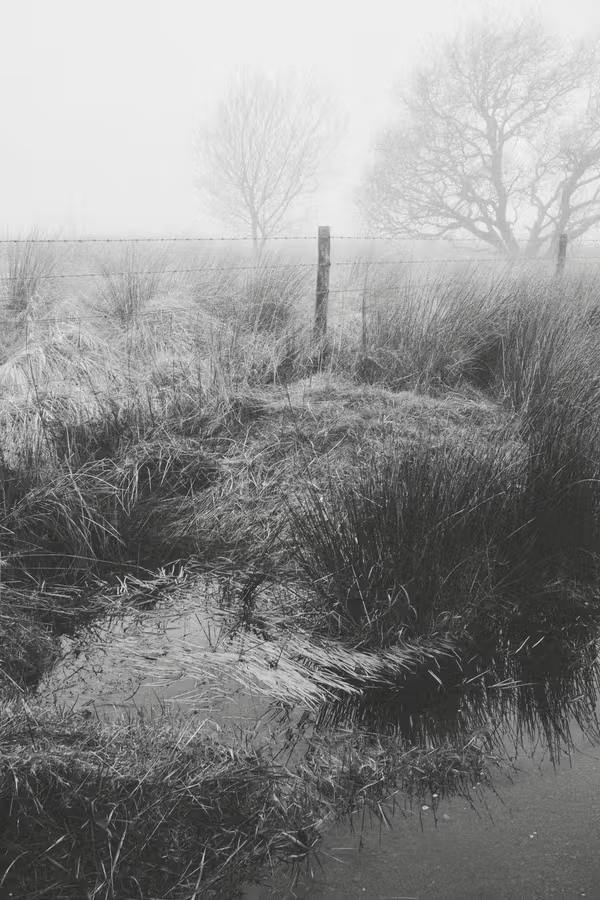
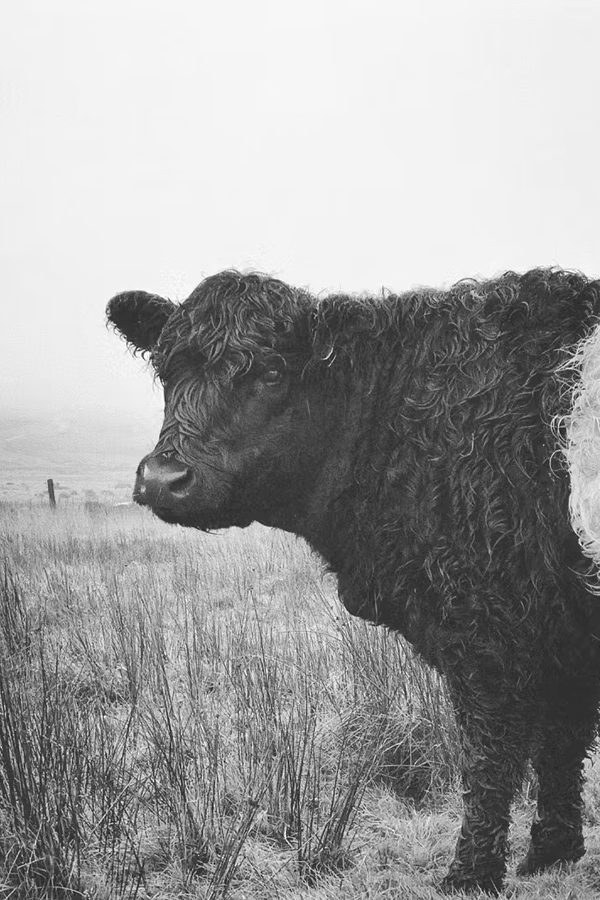
Here you can take a look at her photography series, If Not Now, When?, which was a satellite exhibition of Portraits Hellerau in 2025.
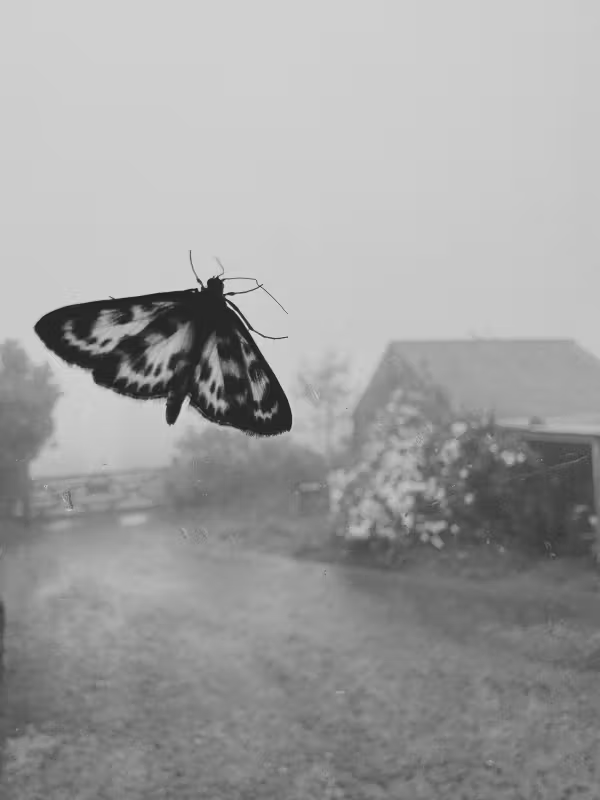
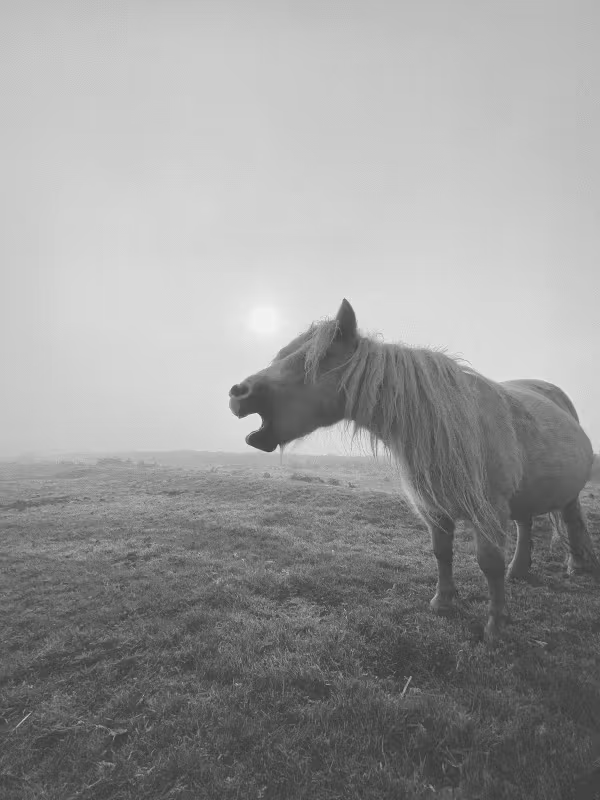
Find out more about Jo Bradford and her series here: